




 USD
USD
Thailand Clears Local Bitcoin, Ether ETFs Under New SEC Rules

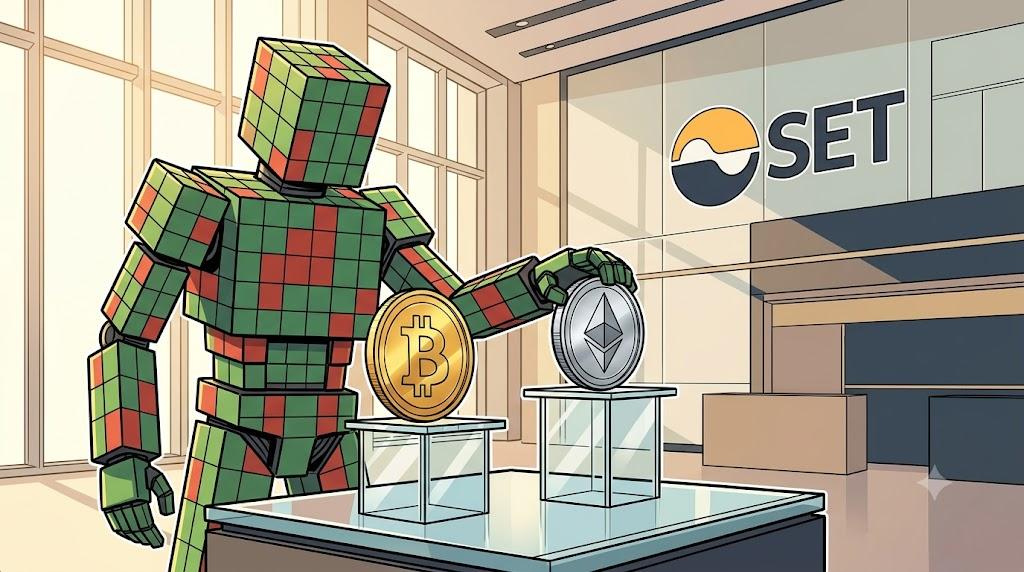
Mutual and private funds gain access as framework takes effect Oct. 16
TL;DR
- Thailand’s Securities and Exchange Commission has cleared locally listed Bitcoin and Ether ETFs and allowed mutual funds and private funds to invest in them.
- The framework takes effect Oct. 16, 2026, but that date is not a confirmed first trading day.
- Each ETF must track one cryptocurrency and keep at least 80% of net asset value in that asset over each accounting year.
Trade smarter on Jupiter, Solana’s leading DEX built for fast execution and deep liquidity.
Swap tokens at competitive rates, route across multiple liquidity sources automatically, and access perpetuals, DCA, and advanced trading tools — all in one place!
Thailand’s Securities and Exchange Commission has issued a framework allowing local asset managers to launch Bitcoin and Ether exchange-traded funds on the Stock Exchange of Thailand, while also permitting Thai mutual funds and private funds to invest in the locally listed products. The rules take effect Oct. 16, 2026, though no fund has yet filed to launch and the date does not mark a confirmed trading debut.
The SEC issued the framework on Oct. 8 through 11 regulatory notifications. Bitcoin and Ether are the only eligible cryptocurrencies at the initial stage. Any future additions will depend on liquidity, market acceptance, blockchain network security and investor protection. Current investment limits for mutual funds and private funds remain in place.
Funds Face Single-Asset, Custody and Risk Rules
Each crypto ETF must be a passive vehicle tracking the price of one cryptocurrency and must hold at least 80% of its net asset value in that asset, averaged over each accounting year. The funds can trade only on the Stock Exchange of Thailand.
Custody must be handled by digital asset custodians regulated by the Thai SEC. Delegated custody must also remain with a licensed custodian, while the regulator retains the option to permit qualified foreign custodians when necessary. Asset managers must demonstrate adequate organizational readiness and may outsource digital asset investment management only to licensed digital asset fund managers.
Qualified digital asset firms may act as fund supervisors if they meet standards covering finances, staffing and operations. Securities firms cannot lend customers money on margin to buy the ETFs. Buyers must receive product disclosures and acknowledge the risks before trading, while securities firms must caution against excessive exposure and emphasize appropriate asset allocation.
The rules also change the route available to Thai investors. Mutual funds and private funds had previously been able to invest only in crypto ETFs issued abroad. The amended framework now lets them buy Thai-listed crypto ETFs as well.
Depositary receipts tied to overseas crypto ETFs are not permitted during the initial stage. Brokers also remain barred from facilitating foreign crypto ETF investments for clients outside the institutional and ultra-high-net-worth groups.
Nirun Fuwattananukul, CEO of Binance Thailand, said using an existing brokerage account removes a hurdle for investors wary of opening exchange accounts and managing wallets. He said issuers still need fund registration, product approval, a Stock Exchange of Thailand listing and custody arrangements before launch.
Framework Follows Months of Consultation
The SEC sought public comment on core principles in April and May and on draft rules in August and September, with responses mostly in favor, according to the regulator. Cryptopolitan reported in August that the draft already contained the two-coin restriction and the 80% holding floor. SEC deputy secretary-general Jomkwan Kongsakul said in January that crypto ETFs had been approved in principle.
Thailand approved its first spot Bitcoin ETF in June 2024 for institutional investors. Crypto gains also face a 0% capital gains rate from Jan. 1, 2025, through the end of 2029.
Thailand was also described as having the most crypto users per capita in the world, at 20%, compared with 13% in the U.S.
This article has been refined and enhanced by ChatGPT.


