




 USD
USDStripe and Advent Reportedly Bid $53 Billion for PayPal

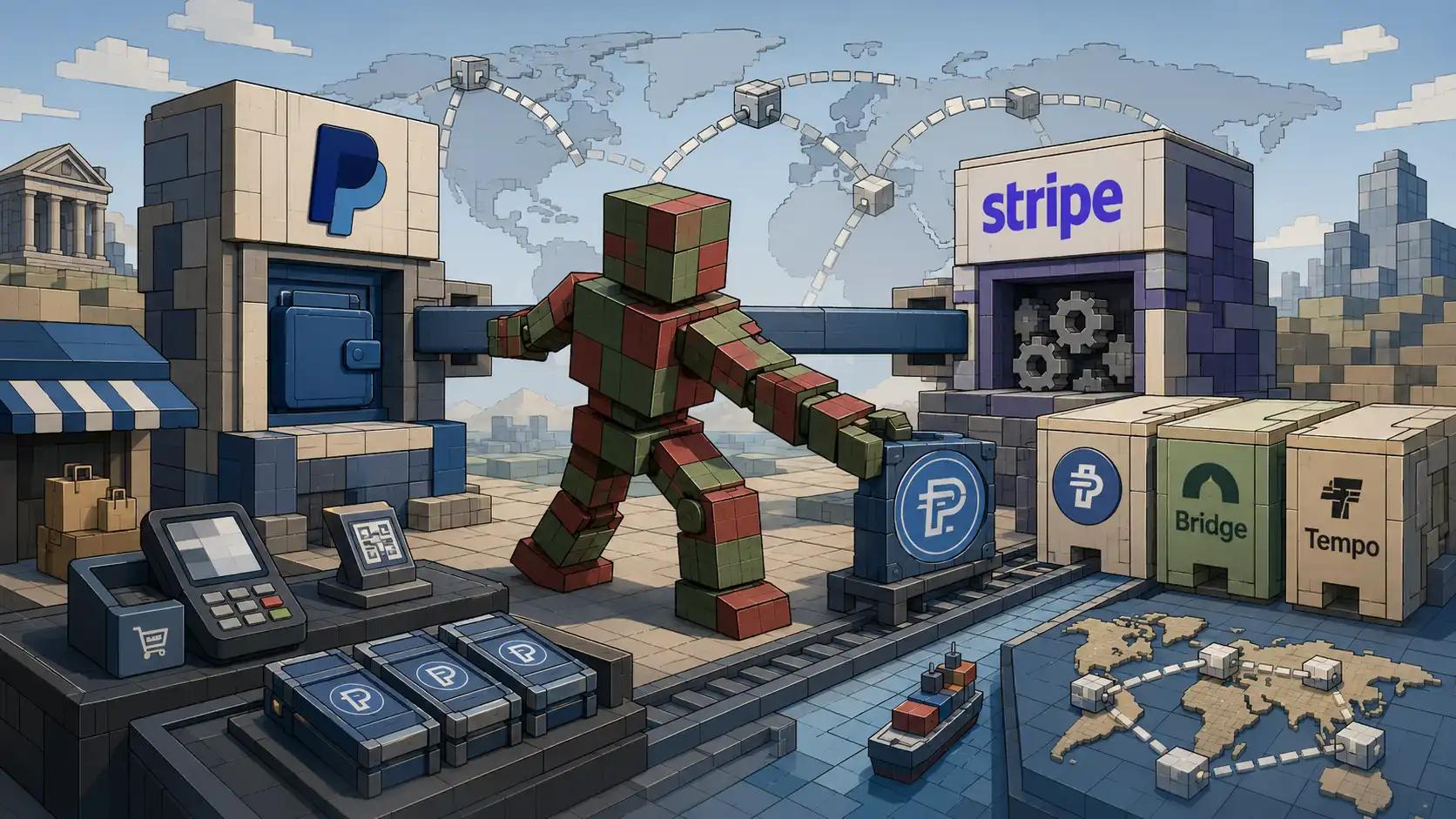
Proposed takeover would combine merchant infrastructure, consumer payments and stablecoin operations
TL;DR
- Stripe and Advent International reportedly offered more than $53 billion to acquire PayPal and take it private.
- The proposed buyers would own PayPal equally and intend to keep its businesses intact.
- No agreement has been signed, and PayPal had not publicly accepted or rejected the proposal.
Trade smarter on Jupiter, Solana’s leading DEX built for fast execution and deep liquidity.
Swap tokens at competitive rates, route across multiple liquidity sources automatically, and access perpetuals, DCA, and advanced trading tools — all in one place!
According to Reuters, Stripe and Advent International have reportedly proposed acquiring PayPal for more than $53 billion, backed largely by committed bank financing and structured to give both buyers equal ownership. The transaction remains a proposal rather than an approved deal: PayPal had not publicly responded, its board had not accepted the offer, and no definitive acquisition agreement had been announced as of July 15, 2026.
People familiar with the discussions cautioned that negotiations might not result in a completed transaction. Stripe, Advent and PayPal had not formally disclosed the proposal through their own public statements when the information emerged.
Stripe and Advent reportedly approached PayPal initially in April 2026 and submitted a formal proposal earlier in July. The plan would remove PayPal from public markets while preserving its interconnected checkout, merchant-processing, consumer-wallet, peer-to-peer payment and cryptocurrency operations. PayPal could still reject the offer, negotiate for improved terms, consider another bidder or continue operating independently.
A formal response from PayPal could take the form of a regulatory filing, a board statement, confirmation of negotiations, a rejection or an announcement that the parties had signed an agreement. No closing date, shareholder-vote timetable, termination fee, financing deadline, regulatory-review schedule or breakup fee was disclosed.
The identities of the banks providing the financing were also not disclosed. No details were provided about interest rates, debt instruments, maturity schedules or the amount of equity that Stripe and Advent would contribute. The proposed financing would make the transaction heavily leveraged, placing future attention on debt service, capital allocation, operating costs and PayPal’s ability to support the structure through cash generation.
Simon Taylor called the proposal “the biggest story in payments I can remember,” adding that he writes about payments professionally. The potential transaction would bring together companies that built their positions in different parts of the digital-payments market: Stripe through merchant and developer infrastructure, and PayPal through consumer accounts, branded checkout, peer-to-peer transfers and merchant services.
Comparable scale, sharply different valuations
Stripe and PayPal process similar amounts of annual payment volume, but the companies have significantly different growth rates and valuations. Stripe’s February 2026 tender offer placed a substantially higher value on the privately held company than the amount reportedly being offered for PayPal.
The combined business would process approximately $3.7 trillion in annual payments. Taylor estimated that amount would equal about 3% of global gross domestic product. The scale would span merchant processing, consumer wallets, online checkout, peer-to-peer transfers, cross-border payments, cryptocurrency services, stablecoins and blockchain-based settlement infrastructure.
PayPal operates in more than 200 countries and would give Stripe access to approximately 439 million active consumer accounts. Its branded checkout product would add a direct consumer-facing distribution channel to Stripe’s merchant relationships, while Venmo would expand Stripe’s presence in peer-to-peer and everyday consumer payments. Braintree would add another large merchant-processing platform, although its overlap with Stripe’s core operations would likely draw scrutiny.
PayPal was valued at approximately $350 billion to $360 billion at its pandemic-era peak in 2021. The proposed acquisition value is therefore a small fraction of that former level, despite offering shareholders a substantial premium to PayPal’s most recent closing price. PayPal’s board would have to weigh the immediate cash premium against the company’s ability to create more value through an independent recovery.
Taylor calculated that the proposal valued PayPal at approximately eight times adjusted free cash flow. PayPal generated approximately $6.4 billion in adjusted free cash flow during the previous year, making it a large, established and cash-generating target for a private-equity investor. Advent’s participation adds a leveraged-buyout component to Stripe’s strategic interest in PayPal’s payments and consumer-distribution assets.
The gap between the companies’ valuations reflects the figures presented for their recent growth. Stripe processed only moderately more annual volume than PayPal but carried a valuation nearly three times the reported purchase price. The proposal would allow Stripe to acquire consumer reach, a global payments brand and established financial products that would be costly to build organically.
Crypto and stablecoins form a central part of the proposal
PayPal’s digital-asset operations would give the combined company an existing stablecoin, consumer cryptocurrency services and distribution through hundreds of millions of accounts. PayPal offers cryptocurrency buying, selling, holding and checkout functions, and it operates PYUSD, a U.S. dollar-linked stablecoin.
Stripe has spent approximately two years expanding its stablecoin and crypto-payments infrastructure. The company acquired Bridge for approximately $1.1 billion, a transaction presented as a record acquisition in the stablecoin sector. Bridge provides infrastructure for businesses to move, manage, convert and settle tokenized money across payment systems and blockchain networks.
Stripe also unveiled Tempo, a payments-focused blockchain developed with Paradigm. Tempo has been presented as capable of sub-second transaction finality, a feature intended for payment environments that require rapid confirmation and settlement.
Stripe backs Open USD, a fee-free stablecoin initiative launched by 140 companies, including Coinbase and Ripple. Stripe reportedly intends to make Open USD the default stablecoin across its platform. The proposal did not explain how Open USD and PYUSD would coexist or whether either product would be repositioned.
Combining PYUSD with Bridge and Tempo could place stablecoin issuance, user access, orchestration and settlement within one corporate group. PayPal would contribute a branded token and consumer distribution, while Stripe would contribute merchant integrations and underlying infrastructure.
Stripe’s merchant network could provide wider acceptance for PYUSD, while PayPal and Venmo could expose stablecoins to users who do not independently interact with blockchain wallets. The transaction could also allow payments to move through card networks, bank rails, internal ledgers, stablecoins or blockchain infrastructure, depending on the products ultimately integrated.
No integration plan was disclosed. The proposal did not state whether PYUSD would remain separate, migrate to Tempo, connect with Open USD or become part of a broader stablecoin offering. It also did not provide estimates for transaction-cost savings, revenue synergies, integration expenses or job reductions.
Stripe has positioned itself as “economic infrastructure for AI,” supplying payment and financial tools to artificial-intelligence startups and other internet businesses. PayPal’s consumer base and established checkout products would broaden that merchant- and developer-focused model into a larger network serving consumers, businesses and digital-asset users.
We’ve launched the all-new COIN360 Perp DEX, built for traders who move fast!
Trade 130+ assets with up to 100× leverage, enjoy instant order placement and low-slippage swaps, and earn USDC passive yield while climbing the leaderboard. Your trades deserve more than speed — they deserve mastery.
PayPal was already reorganizing
PayPal announced on April 29, 2026, that it would reorganize its operations into three business divisions, with further details expected during its May 5 earnings call. The restructuring was intended to simplify the company, improve execution, strengthen accountability and refocus resources on core businesses.
PayPal President and CEO Enrique Lores said, “To accelerate growth and unlock our full potential, we need to recommit to our fundamentals.” Lores said the company would focus on its “three strong businesses.”
PayPal appointed Frank Keller to lead the checkout segment. Interim leaders were appointed for Venmo and Payment Services and Crypto after the departures of Diego Scotti and Michelle Gill. The takeover proposal therefore emerged while PayPal was still implementing a significant operating reorganization and before management had demonstrated the full effect of the new structure.
The board must now assess the takeover against PayPal’s standalone plan, including whether the reorganization could produce shareholder value above the proposed price. Acceptance would expose the transaction to financing, regulatory and integration risks, while rejection would increase pressure on management to show that PayPal can improve performance independently.
Regulatory review remains unresolved
A combination of Stripe and PayPal would likely face substantial competition review because both companies provide payment-processing infrastructure to online merchants. Braintree’s overlap with Stripe’s core business could become a central issue for authorities examining whether the transaction would reduce merchant choice or weaken price competition.
U.S. Department of Justice and Federal Trade Commission merger guidelines warn against transactions that could contribute to monopoly formation or eliminate meaningful competition. European authorities would also be expected to examine the combination because of PayPal’s broad international operations and the merged company’s potential role in cross-border commerce.
Regulators could assess whether the combined group would have the ability to bundle checkout, merchant processing, wallets, stablecoins and settlement infrastructure in ways that disadvantage competitors. Authorities could also examine whether merchants would face increased switching costs or whether rival payment companies would retain fair access to consumers and businesses.
Data concentration could become another concern because the merged organization could handle information generated through merchant transactions, consumer wallets, peer-to-peer transfers, cryptocurrency activity and blockchain settlement. No proposed restrictions on data use were disclosed.
Possible remedies could include divestitures, pricing commitments, access requirements or limits on how products are bundled. The stated plan to keep PayPal intact could complicate a review if authorities require the sale of overlapping operations. No divestitures or regulatory concessions were identified.
The proposal did not clarify the future roles of Stripe or PayPal executives, whether Stripe would remain privately held or whether the combined company might later pursue a public listing. It also did not identify any competing bidder. Few parties would be able to finance a transaction of this size while also managing a broad international antitrust review, but no conclusion about alternative offers has been disclosed.
FAQ
Has PayPal accepted the offer?
No. PayPal had not publicly accepted or rejected the proposal.
Would PayPal be broken apart?
The proposed buyers reportedly intend to keep PayPal intact.
Who would own PayPal?
Stripe and Advent would reportedly hold equal ownership stakes.
Is the transaction complete?
No definitive agreement had been signed or announced.
This article has been refined and enhanced by ChatGPT.


