




 USD
USDInstitutional Crypto Exposure Retreats as $73B Exits Since October 2025 and Trading Volumes Slide to 2024 Levels


Family Offices Cut Crypto Allocations, Banks De-Risk, and Liquidity Tightens Across Digital Asset Markets
TL;DR
- JPMorgan data shows most family offices hold no crypto exposure, prioritizing artificial intelligence over digital assets in 2026 allocations.
- Nomura reduced crypto exposure after Q3 2025 losses, while Multicoin Capital co-founder Kyle Samani stepped back to focus on AI and robotics.
- Digital asset investment products have lost $73 billion since October 2025, with crypto prices pressured as volumes fall back to 2024 levels.
We’ve launched the all-new COIN360 Perp DEX, built for traders who move fast!
Trade 130+ assets with up to 100× leverage, enjoy instant order placement and low-slippage swaps, and earn USDC passive yield while climbing the leaderboard. Your trades deserve more than speed — they deserve mastery.
Family offices managing ultra-high-net-worth capital have sharply limited their exposure to digital assets, according to JPMorgan’s 2026 Global Family Office Report published in early February 2026. The survey covered 333 family offices across more than 30 countries, each overseeing an average net worth of $1.6 billion. The data showed that 89% of respondents reported zero exposure to cryptocurrencies, while only 17% identified crypto and digital assets as a priority investment theme for 2026.
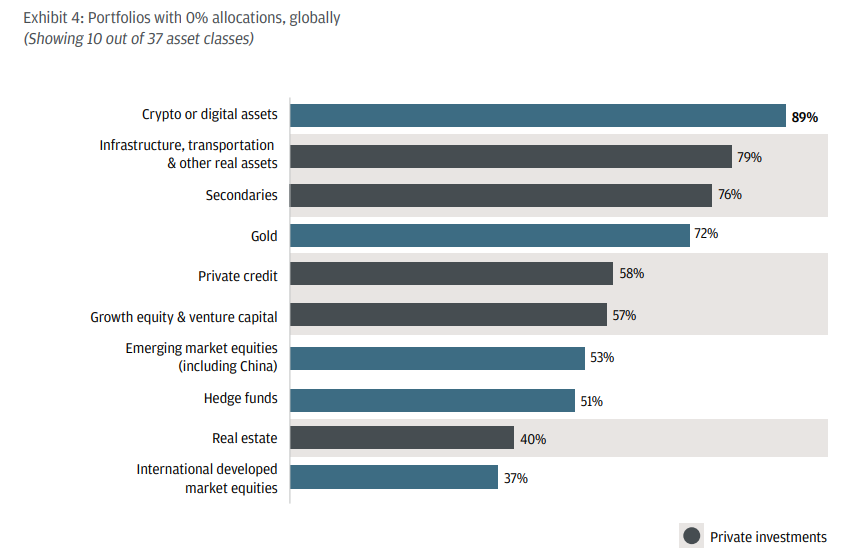
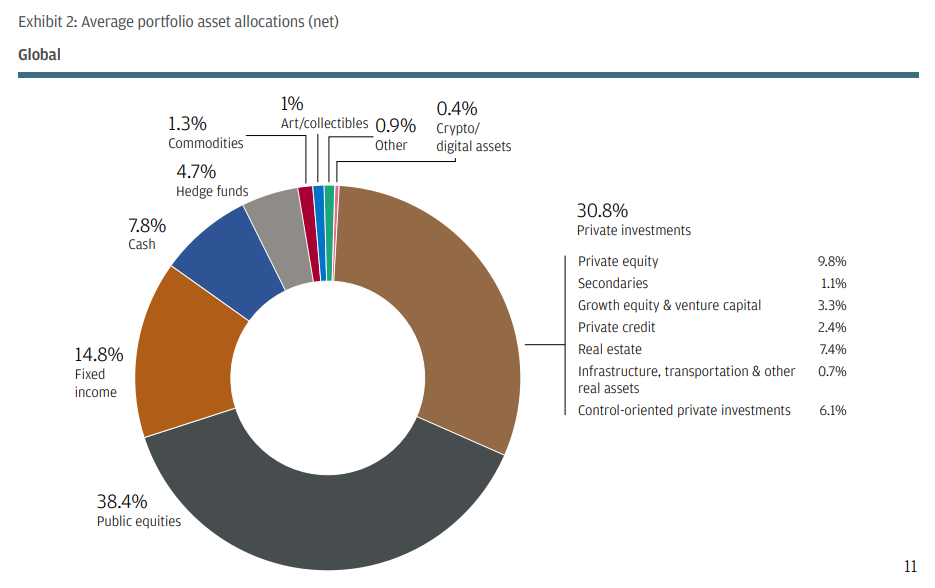
Artificial intelligence emerged as the dominant allocation focus, with 65% of family offices ranking it as a top investment theme. Healthcare innovation followed at 50%, while infrastructure investments were cited by 41%. Average crypto exposure across surveyed portfolios stood at 0.4% of assets, with Bitcoin accounting for roughly 0.2%. Despite macro uncertainty, 72% of family offices reported holding no gold, even as nearly 20% cited geopolitical risk as their top concern and around 60% identified inflation as a major risk factor.
JPMorgan Global Head of Alternatives Kristin Kallergis Rowland said alternatives “are no longer a tactical complement but a strategic pillar.” Diverging institutional sentiment was also evident, as a separate Coinbase and Glassnode survey of 148 institutional investors conducted between December 2025 and January 2026 found nearly 70% viewed Bitcoin as undervalued, while 62% maintained or increased exposure during recent sell-offs.
Traditional financial institutions have also reduced risk. Nomura Holdings, Japan’s largest investment bank and wealth manager, cut its crypto exposure following losses at its digital asset subsidiary during Q3 2025. The move centered on Laser Digital Holdings, Nomura’s Europe-based crypto unit. Nomura CFO Hiroyuki Moriuchi said the reduction reflected tighter risk controls while maintaining the firm’s medium- to long-term digital asset strategy. Nomura manages approximately ¥153 trillion in client assets, and its annual net income fell 9.7% to ¥91.6 billion for the quarter ended December 31, with overseas profits dropping about 70% to ¥16.3 billion.
Kyle Samani, co-founder and managing partner of Multicoin Capital, has also stepped back from his full-time role at the crypto-focused venture firm to pursue new technology initiatives centered on artificial intelligence and robotics, adding to signs of shifting priorities among influential crypto investors. Multicoin confirmed the decision in a blog post published Wednesday and signed by co-founder Tushar Jain, Samani, and the broader Multicoin team, stating the transition followed a deliberate, long-term process rather than a sudden exit.
Samani, who co-founded Multicoin more than eight years ago, helped shape the firm into a major crypto venture capital player through early, high-conviction investments, particularly across the Solana ecosystem, and was a vocal advocate of high-performance blockchain infrastructure.
Jain wrote that Samani’s interests gradually expanded beyond crypto toward artificial intelligence, robotics, and longevity research, where he now plans to spend more time investing and experimenting. Samani will remain involved in crypto through several roles, including continuing as chairman of Forward, serving on the board of cryptography-focused project Zama following its ZAMA token launch, and supporting Multicoin portfolio companies while making personal investments, especially those related to Solana.
Samani has also remained active in U.S. policy discussions, including meetings with the Securities and Exchange Commission’s Crypto Task Force on staking exchange-traded funds and public support for the proposed Clarity Act, while maintaining that crypto will ultimately reshape the financial system over time.
Market data compiled by CoinShares shows that since the October 2025 price peaks, digital asset investment products have lost roughly $73 billion in assets. Investors withdrew about $1.7 billion from these products, resulting in a net negative global outflow of approximately $1 billion that erased year-to-date gains. Bitcoin products led the outflows, while short-BTC funds recorded inflows as hedging demand increased amid volatility and macro pressure.
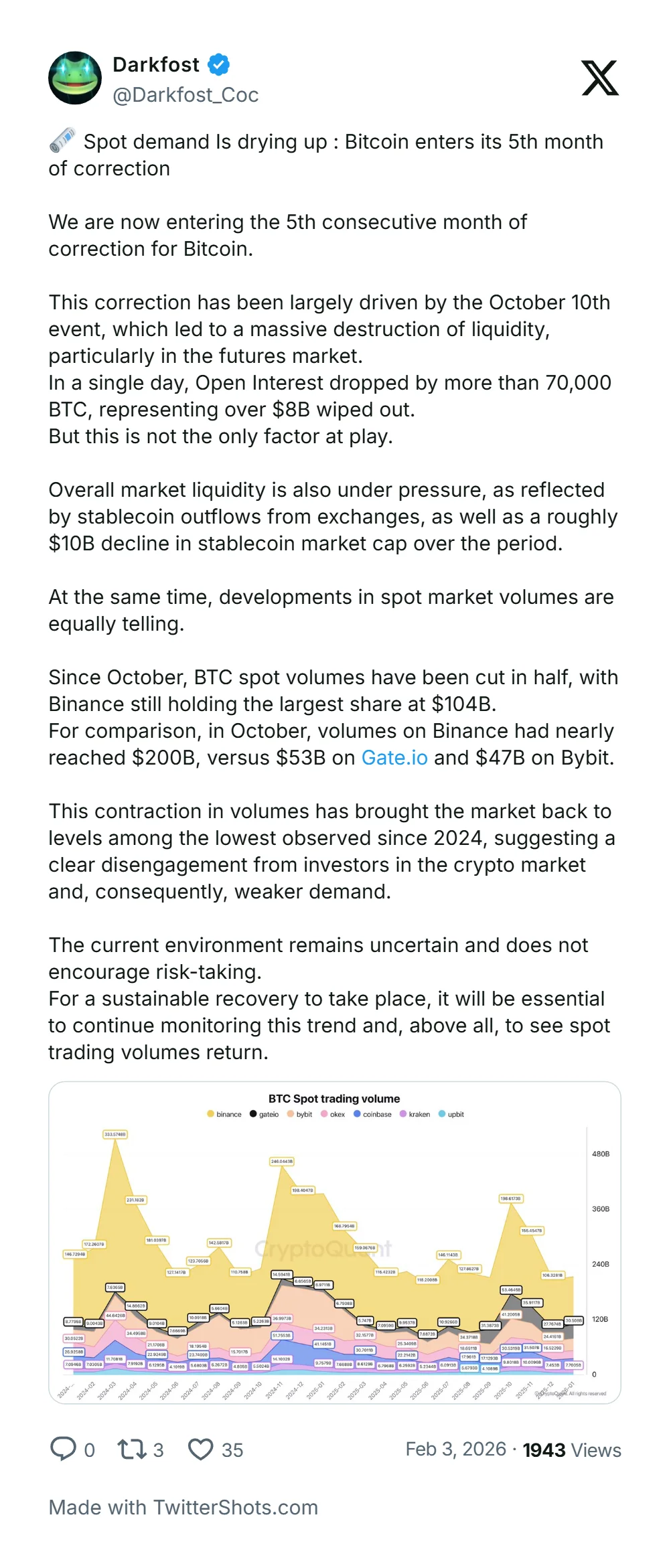
Selling pressure pushed Bitcoin below key psychological levels, with prices trading near nine-month lows around $78,000, while major altcoins remained near multi-month bottoms. Exchange data showed spot trading volumes on major centralized platforms declined from roughly $2 trillion in October 2025 to about $1 trillion by late January and early February 2026. Bitcoin spot volumes on Binance fell from about $200 billion to roughly $104 billion over the same period.
CryptoQuant contributor Darkfost said the contraction has brought volume metrics back to their lowest levels since 2024. The decline in activity coincided with stablecoin outflows from exchanges and an estimated $10 billion reduction in total stablecoin market capitalization, tightening liquidity across trading venues. Reuters reported approximately $2.56 billion in Bitcoin liquidations in early February 2026 during cross-asset sell-offs.
Macro developments also weighed on sentiment. Analysts cited expectations for tighter monetary policy, a stronger U.S. dollar, and higher real yields following Donald Trump’s nomination of Kevin Warsh as U.S. Federal Reserve Chair. During the drawdown, Bitcoin briefly dipped below $75,000, representing a 37% decline from October 2025 highs, as crypto price, crypto price index measures, and overall coin market cap adjusted amid reduced risk appetite.
This article has been refined and enhanced by ChatGPT.


