




 USD
USDCrypto Whale’s $50.4M DeFi Trade Mishap and $14.2M Ethereum Transfer Error Combine in On-Chain Losses


Two separate blockchain mistakes erase millions as slippage disaster and irreversible address error expose execution risks in decentralized finance
TL;DR
- A crypto whale lost nearly $50.4 million after swapping USDT for AAVE through a DeFi route that left the trader with roughly $36,400 worth of tokens.
- A separate operational mistake on February 18, 2026 permanently locked 4,000 ETH valued at about $14.2 million in a defunct smart contract.
- Combined on-chain execution errors erased roughly $63 million in investor funds within weeks.
We’ve launched the all-new COIN360 Perp DEX, built for traders who move fast!
Trade 130+ assets with up to 100× leverage, enjoy instant order placement and low-slippage swaps, and earn USDC passive yield while climbing the leaderboard. Your trades deserve more than speed — they deserve mastery.
A series of costly operational mistakes in decentralized finance erased roughly $63 million in investor capital within weeks, combining a catastrophic trading execution error with an irreversible cryptocurrency transfer to a dead smart contract. Blockchain records show a crypto whale attempted to swap $50.4 million worth of Tether for Aave tokens through a DeFi route that triggered extreme slippage and drained liquidity pools, leaving the trader with only about $36,400 worth of AAVE. Separate reporting detailed another investor mistake that permanently locked 4,000 ETH valued at approximately $14.2 million after a mistaken address transfer on February 18, 2026.
The whale transaction began after the wallet received stablecoins from a centralized exchange roughly 20 days earlier before moving the funds into the Aave protocol and initiating a token swap through CoW Protocol, an automated trading aggregator integrated into the interface. Blockchain traces show the trade started by burning aEthUSDT to withdraw roughly 50.43 million USDT, routing the order through a decentralized trading path that attempted to convert the funds into ether before purchasing AAVE tokens. The order moved through Uniswap V3 liquidity pools and executed despite warnings about massive price impact displayed by the interface.
Liquidity constraints caused the first stage of the trade to convert the funds into about 17,958 WETH, generating approximately $13.6 million in losses during the swap as the pool struggled to absorb an order of that magnitude. The transaction then routed the ether through a small AAVE/WETH pool on SushiSwap with limited liquidity, draining the pool and executing the trade at an extremely unfavorable price. The final output left the trader holding roughly 324–331 AAVE tokens, a tiny fraction of the initial capital deployed in the trade.
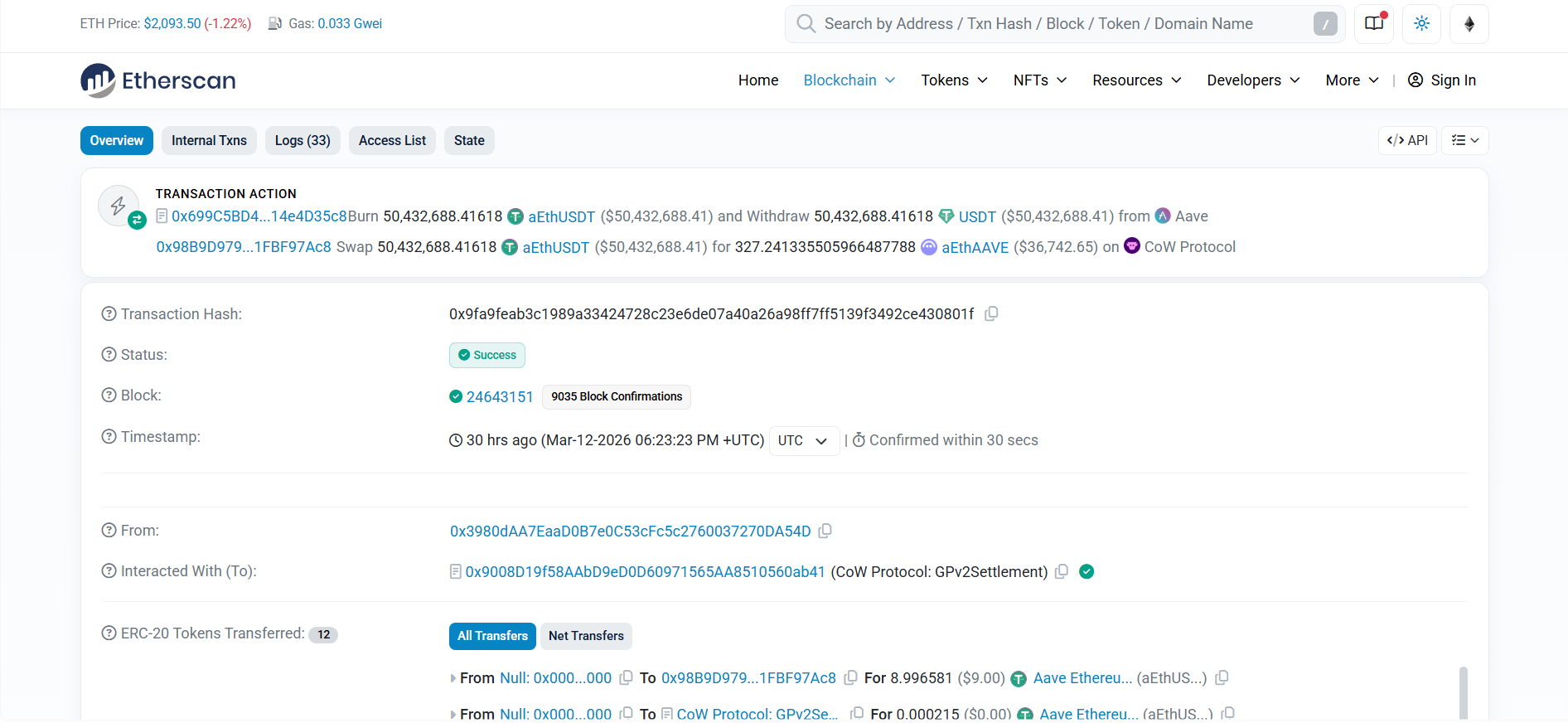
The platform issued a warning before the trade executed, according to Aave founder Stani Kulechov, who later described the situation publicly. “The order size was unusually large and the protocol had warned the trader about the potential for extreme slippage, requiring an additional confirmation to proceed,” Kulechov said. The trader nonetheless confirmed the order through a mobile interface despite the warning about extraordinary price impact. Blockchain analysts reviewing the event said some trading platforms prevent transactions with extreme price impact before execution.
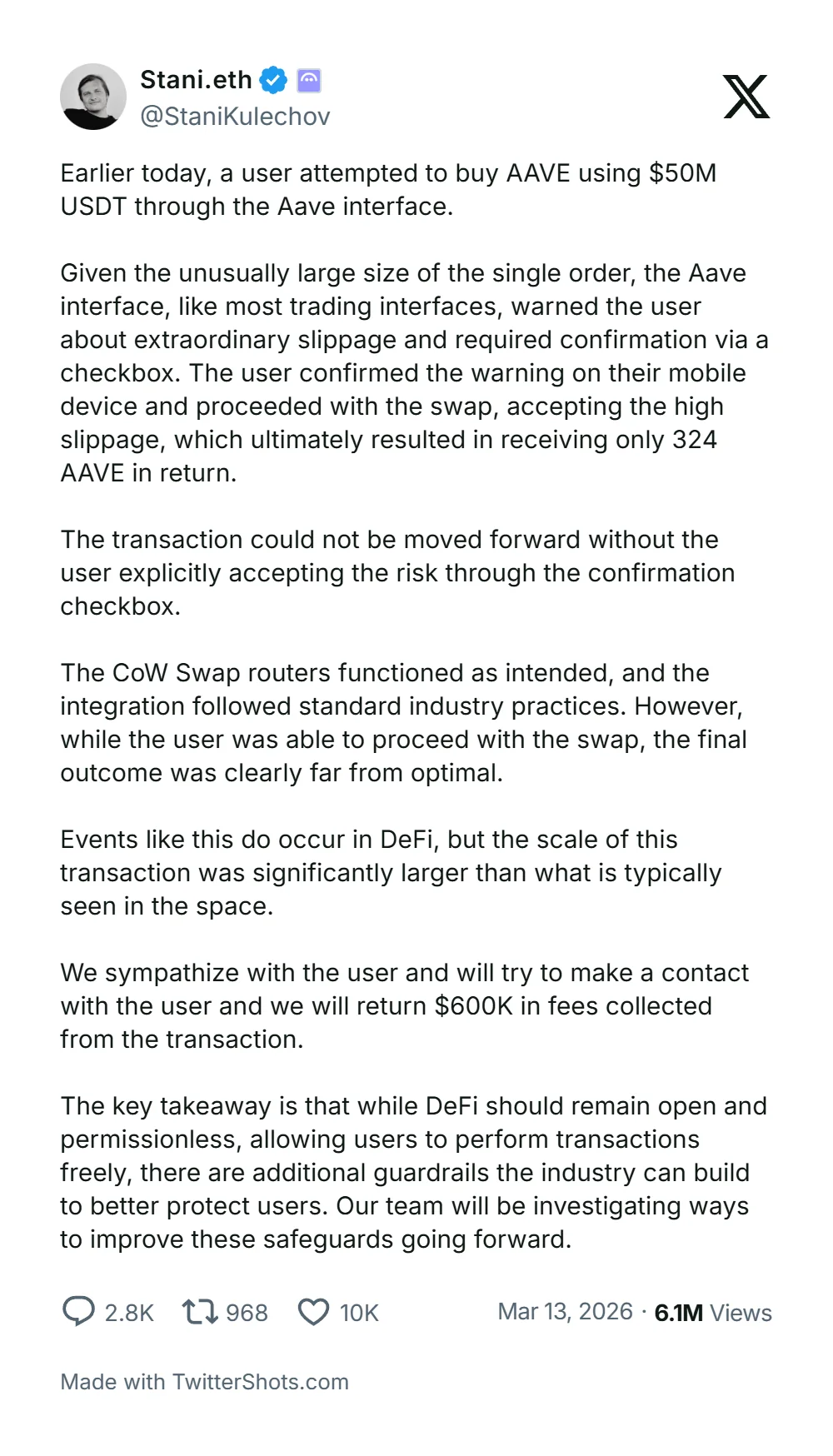
Observers noted that the distorted pricing created an immediate arbitrage opportunity for automated trading systems operating on the Ethereum network. Maximal Extractable Value infrastructure rapidly captured the imbalance created by the failed trade. Blockchain monitoring suggested that one MEV bot extracted about $49.5 million by arbitraging the price difference created by the transaction, while block builders and validators collected fees associated with the execution. Aave later indicated it would attempt to contact the trader and return about $600,000 in fees collected from the transaction.
Another costly mistake occurred when an institutional crypto investor attempted to move funds to a centralized exchange deposit address but accidentally pasted the address of a defunct decentralized finance contract. The error resulted in a transfer of 4,000 ETH, worth roughly $14.2 million, into a contract that contained no withdrawal function. Developers associated with the inactive protocol confirmed that the contract code lacks any mechanism allowing the funds to be recovered once received by the address.
The mistake occurred because the contract address remained stored in the trader’s clipboard from an earlier interaction with the protocol, according to people familiar with the transaction. Blockchain execution processed the transfer exactly as submitted by the wallet. Developers reviewing the situation confirmed that the smart contract’s code prevents retrieval of funds sent to the address. The Ethereum network processed the transaction as valid because it matched the signed instruction broadcast to the chain.
The incidents unfolded amid heavy activity across decentralized markets as traders navigate fragmented liquidity and automated execution systems. Data from the COIN360 crypto price index, which tracks the global crypto price environment across major tokens and contributes to broader coin market cap calculations, showed strong trading activity across DeFi tokens during the same period in which the costly execution errors occurred.
This article has been refined and enhanced by ChatGPT.


