




 USD
USD
Corporate Bitcoin Treasuries Stay Underwater as Buying Slows

Corporate accumulation drops sharply while ETF outflows and weaker capital flows add pressure
TL;DR
- Corporate Bitcoin treasuries added about 5,900 BTC over the latest three-month period, far below the roughly 89,000 BTC bought in July 2025 alone.
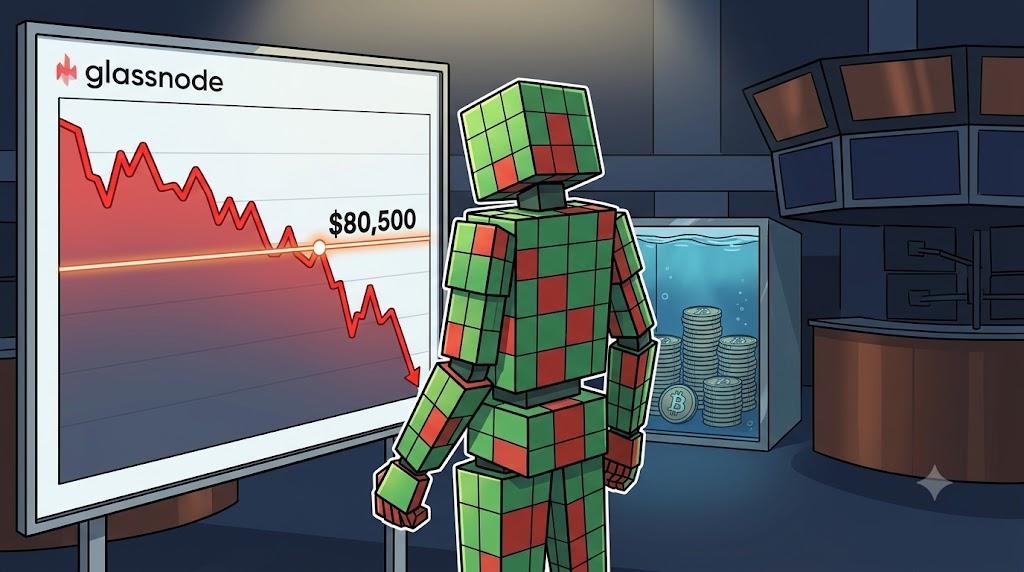
- Glassnode put the aggregate corporate treasury cost basis at $80,500, leaving the cohort underwater with Bitcoin trading below that level.
- U.S. spot Bitcoin ETFs posted $462.7 million in five-day net outflows through Sept. 11 as realized capitalization also began declining.
Trade smarter on Jupiter, Solana’s leading DEX built for fast execution and deep liquidity.
Swap tokens at competitive rates, route across multiple liquidity sources automatically, and access perpetuals, DCA, and advanced trading tools — all in one place!
Corporate Bitcoin treasury companies have sharply reduced new purchases while their combined holdings remain underwater, with Glassnode placing the cohort’s average entry price at $80,500 and saying recent accumulation has fallen to about 5,900 BTC over three months.
Glassnode said the roughly 5,900 BTC acquired during the latest period amounted to less than 7% of the approximately 89,000 BTC that listed companies bought in July 2025 alone. Companies accumulated that larger amount while the Bitcoin price was above $100,000, making the recent slowdown notable even though the asset is now trading materially below those levels.
A second account of the same three-month accumulation figure attributed the approximately 5,900 BTC total to Coinglass. Both sets of information pointed to the same broad reduction in corporate purchases, but the attribution attached to the figures differed and should be kept separate.
$80,500 cost basis becomes key threshold
Glassnode said the Corporate Treasury Cost Basis, representing the aggregate average entry level for listed companies holding Bitcoin, stood at $80,500. That level was about 6% above spot when Glassnode made its assessment, leaving the cohort collectively at an unrealized loss.
“Their average entry, the Corporate Treasury Cost Basis, sits at $80.5K, about 6% above spot, so the group as a whole is under water,” Glassnode said.
Bitcoin made two attempts during 2026 to recover the corporate cost-basis level, according to Glassnode, but neither move resulted in a sustained hold above it. Glassnode said the level could act as overhead supply because holders approaching breakeven may become more willing to reduce exposure.
“A buyer that has stopped buying and holds a paper loss is not support,” Glassnode said.
Glassnode said a sustained move back above the average entry level would materially change the position of the group. “A reclaim of $80.5K would put the treasuries back in profit and remove one layer of overhead supply; until then their entry is one more ceiling.”
The underwater status applies to the aggregate corporate cohort rather than every individual company. The supplied figures do not show broad corporate liquidation of existing Bitcoin holdings; they show a sharp reduction in new purchases alongside unrealized losses on average.
Strategy remains below the broader corporate cost basis
Strategy remains a major exception to the aggregate treasury position because its reported average purchase price sits below the broader corporate benchmark.
Strategy holds 845,050 BTC at a reported cost basis of $75,412 per BTC. That average is $5,088 below the $80,500 corporate treasury cost basis.
Strategy most recently purchased 4,603 BTC at the end of August 2026, its first Bitcoin acquisition in two months. That purchase alone amounted to roughly 78% of the approximately 5,900 BTC cited as the entire recent corporate accumulation total.
Strategy’s position shows why the aggregate treasury cost basis should not be treated as the entry price of every listed holder. Its reported average remains below the broader benchmark even while Glassnode classifies the combined corporate cohort as underwater.
ETF flows and realized capitalization weaken
Institutional demand through U.S. spot Bitcoin ETFs also weakened during the period covered by the figures. The products recorded $462.7 million in net outflows across the five trading days through Sept. 11, 2026, reversing three consecutive weeks of net inflows.
Glassnode characterized the ETF environment as a “market in waiting,” with buyer appetite sensitive to short-term Bitcoin price movements. The weakening ETF flows came as corporate treasury purchases were already running far below their earlier pace.
Bitcoin’s realized capitalization also began declining as of Sept. 15, 2026, with the metric standing at approximately $1.069 trillion. The supplied explanation defines realized capitalization as the cumulative value of Bitcoin based on the price at which each unit of supply last moved onchain.
Glassnode interpreted the decline as another sign that fresh capital entering Bitcoin had weakened. “A return to positive daily Realized Cap changes would say the buyers are back,” Glassnode said.
Glassnode also outlined the opposite scenario: “a run of outflows while price sits under the mean would mean the range’s buyers have started to give up.”
The three demand indicators point in the same direction within the supplied data: corporate treasury purchases have slowed substantially, ETF flows recently turned negative, and realized capitalization has started declining.
Fed raises rates as liquidity backdrop tightens
A separate macro development arrived on Sept. 16, 2026, when the U.S. Federal Reserve enacted its first interest-rate increase since July 2023.
Related information accompanying the treasury coverage said the Federal Reserve unanimously raised its benchmark rate by 25 basis points to a target range of 3.75% to 4%. The rate move was presented as a potential start to renewed policy tightening and a more difficult liquidity environment for crypto markets.
Corporate treasury conditions therefore entered Sept. 17, 2026, with listed-company accumulation sharply below its earlier pace, the aggregate cohort trading below its average entry level and additional institutional demand indicators showing weaker fresh capital.
Glassnode’s $80,500 corporate treasury cost basis remains the central threshold in its framework. A sustained move above that level would return the aggregate cohort to profit, while continued trading below it would leave the group underwater as corporate buying remains subdued.
This article has been refined and enhanced by ChatGPT.


