




 USD
USDBrazil Enacts Law No. 15.358 Allowing Seized Crypto to Fund Police Operations and Expand Asset-Freezing Powers

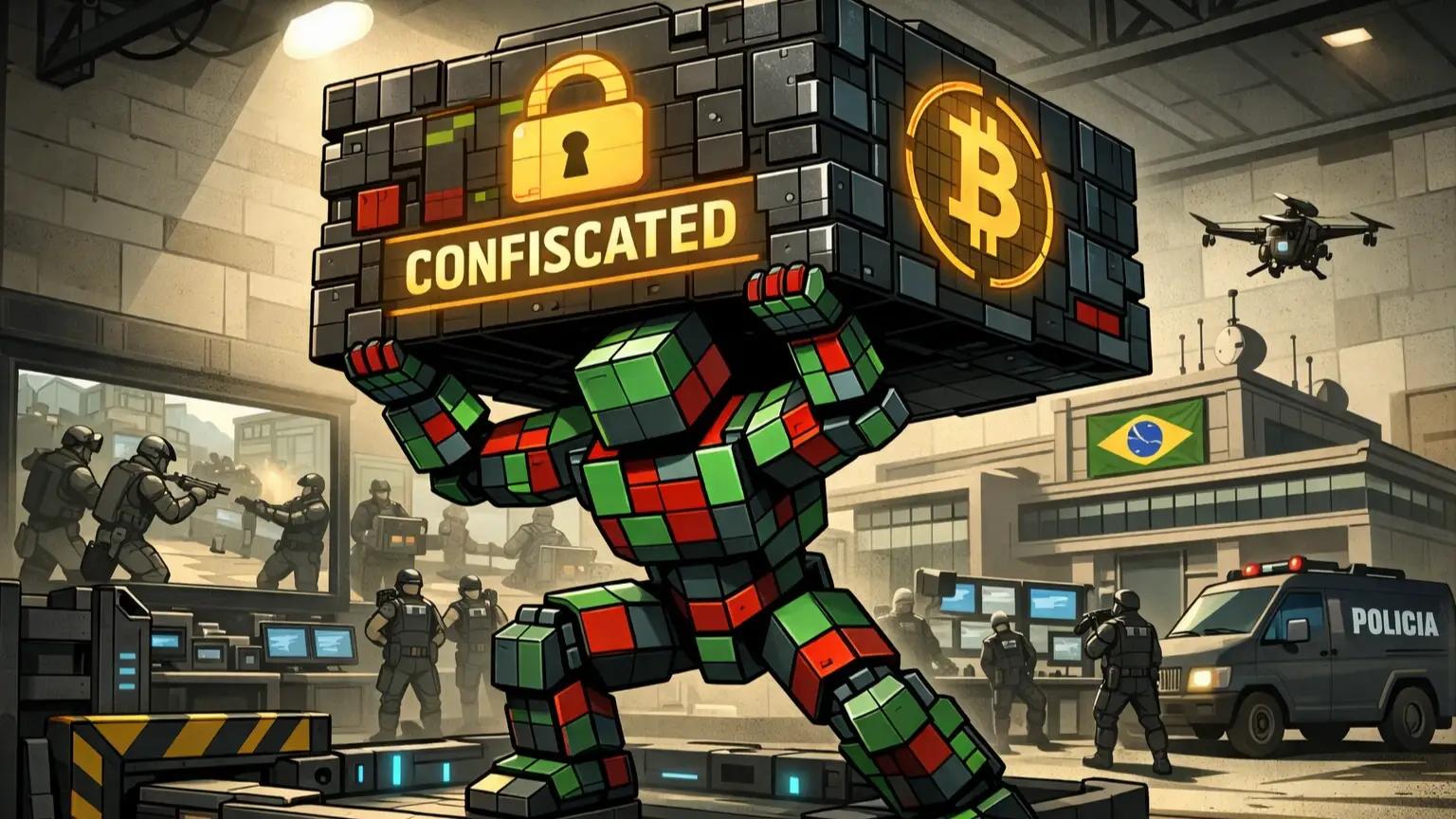
New Organized Crime Framework Authorizes Use of Confiscated Digital Assets for Security Spending and Cross-Border Enforcement
TL;DR
- Brazil approved Law No. 15.358 allowing seized crypto to fund police operations
- Authorities gain expanded powers to freeze, block, and seize digital assets
- Law targets organized crime and enables international cooperation
We’ve launched the all-new COIN360 Perp DEX, built for traders who move fast!
Trade 130+ assets with up to 100× leverage, enjoy instant order placement and low-slippage swaps, and earn USDC passive yield while climbing the leaderboard. Your trades deserve more than speed — they deserve mastery.
Brazil has approved Law No. 15.358, introducing a legal framework that allows authorities to seize digital assets linked to criminal activity and redirect forfeited crypto toward public-security funding. The measure classifies crypto as property that can be treated as an instrument of crime, enabling confiscation even when the asset was not used exclusively for illicit purposes. The law permits the use of seized funds to support law enforcement operations, including equipment upgrades, training programs, and specialized missions, subject to judicial authorization.
Authorities are now empowered to freeze, block, and seize both traditional and digital assets during criminal investigations, with enforcement extending to crypto wallets, exchange accounts, and related financial infrastructure. The framework also allows access to platforms and services tied to investigations to be restricted during proceedings and permanently suspended following conviction. Officials can coordinate with international agencies to track and recover assets across jurisdictions, reflecting the cross-border nature of crypto transactions involving exchanges, OTC desks, and non-custodial wallets.
The law specifically targets organized criminal groups, including militias and coordinated networks operating with financial and territorial control. Enforcement provisions expand penalties for activities such as obstructing police operations and using encrypted communication tools to conceal illicit conduct. Authorities are also permitted to provisionally use confiscated assets before final forfeiture rulings, provided courts approve their deployment for operational needs within public-security agencies.
Brazil’s policy direction differs from approaches seen elsewhere, as confiscated crypto under the new law is routed directly into security funding rather than held in reserve structures. Parallel discussions continue around a separate national Bitcoin reserve proposal that would allow allocation of up to 5% of treasury reserves into Bitcoin and authorize purchases of up to 1 million BTC under an expanded draft introduced in February. Those discussions remain distinct from the enacted forfeiture framework governing seized assets.
The measure arrives amid heightened enforcement activity tied to crypto-related financial crimes, including Operation Lusocoin, a 2025 Federal Police investigation targeting a large-scale laundering and foreign-exchange evasion network. Authorities linked the operation to billions of Brazilian reais moved through shell companies, OTC intermediaries, and decentralized wallet structures. Brazil’s population of more than 213 million and rising adoption of digital assets have placed additional focus on regulatory and enforcement mechanisms surrounding crypto markets, where crypto price movements tracked via a crypto price index and broader coin market cap metrics continue to intersect with financial crime investigations.
This article has been refined and enhanced by ChatGPT.


